Side-event at the 57th session of UN Statistical Commission
03 March 2026
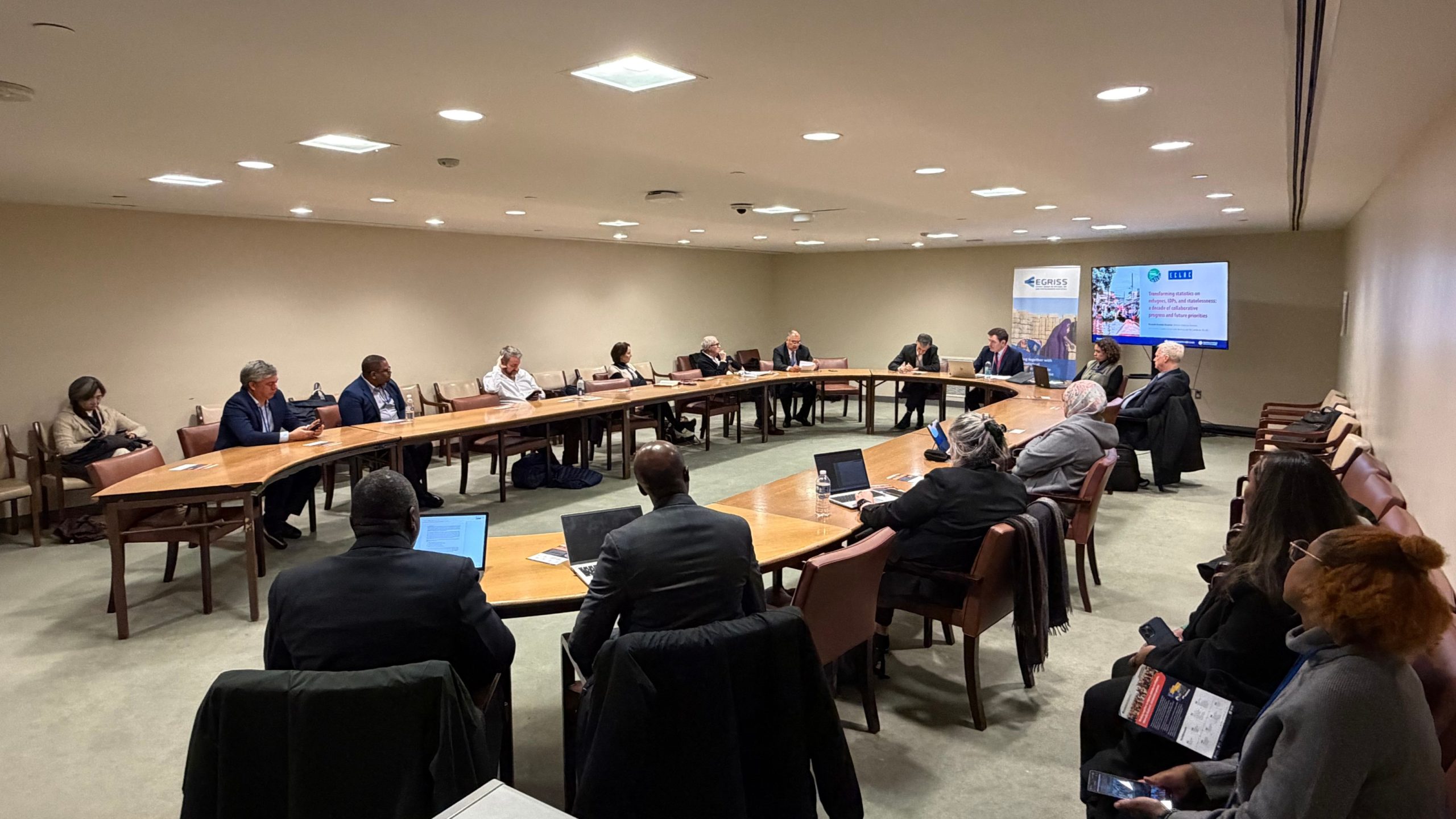
The Expert Group on Refugee, IDP and Statelessness Statistics (EGRISS) held a side event at the 57th Session of the United Nations Statistical Commission to reflect on a decade of its work, celebrate achievements, and set the agenda for what comes next. Co-organised with Statistics Norway (SSB), the session brought together representatives from the Kenya National Bureau of Statistics (KNBS), Mexico’s National Institute of Statistics and Geography (INEGI) the UN Regional Commission for Latin America and the Caribbean (ECLAC), the World Bank, and the EGRISS Secretariat, each offering a different vantage point on the same ten years of hard-won progress.
In his opening remarks, moderator Vebjørn Aalandslid, Senior Adviser at SSB, recalled that in 2016 there were “very few national statistical offices producing any data on forced displacement”. In that year, a report presented at the 47th session of the UNSC by SSB, Eurostat, the Turkish Statistical Institute, and UNHCR called for a comprehensive statistical framework that would bridge the humanitarian sector and national statistical systems, highlighting the need for improved statistics on refugees and asylum-seekers amid escalating global displacement. Welcoming the analysis, the Commission endorsed the establishment of the Expert Group.
Kenya: Making refugees visible in national statistics
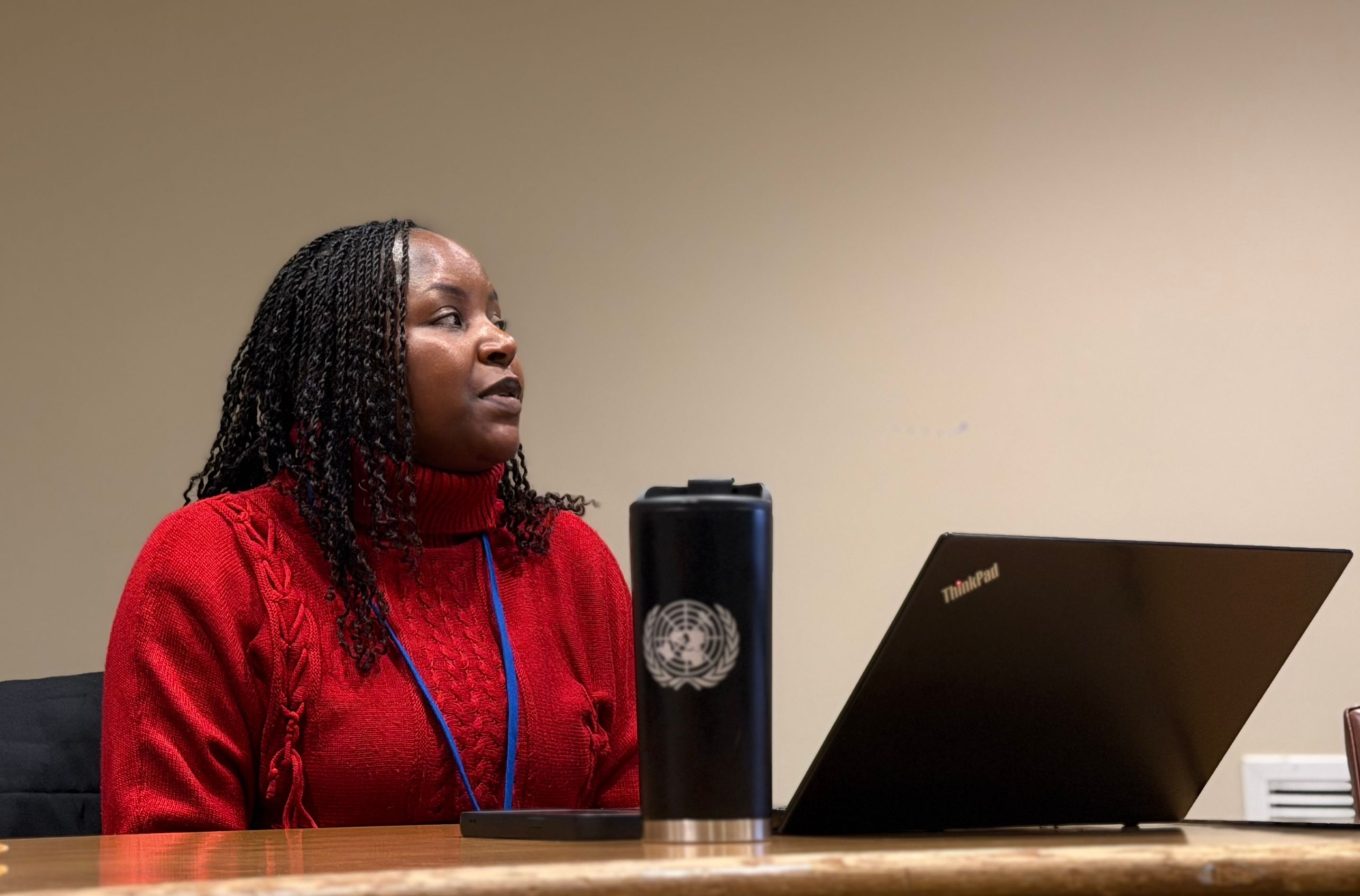
Sarah Omache, presenting on behalf of Dr. Macdonald George Obudho of the Kenya National Bureau of Statistics (KNBS), opened the panel describing how Kenya has used the International Recommendations on Refugee Statistics (IRRS) as the guiding framework for integrating refugee and displacement data across its national statistical system. The country’s 2019 census included questions on nationality, age, sex, migration reasons, and economic activities for refugees. The 2022 Demographic and Health Survey integrated forced displacement questions.
A ongoing household budget survey has established a dedicated sampling frame for refugees — covering Kenya’s two major camps as well as urban refugee populations. “We have demonstrated ownership by ensuring that we entrench the IRRS in our national framework, so that refugees are visible, so that no one is left behind”, she commented.
However, challenges remain: fear of self-identification among urban refugees, the absence of a dedicated stand-alone publication on displacement, gaps in survey coverage, and limited sustained funding. Kenya sees its continued EGRISS membership, an inclusive data charter action plan, and a planned comprehensive survey of forcibly displaced persons as the key pathways to address them.
Mexico: Building the Evidence Base on Internal Displacement
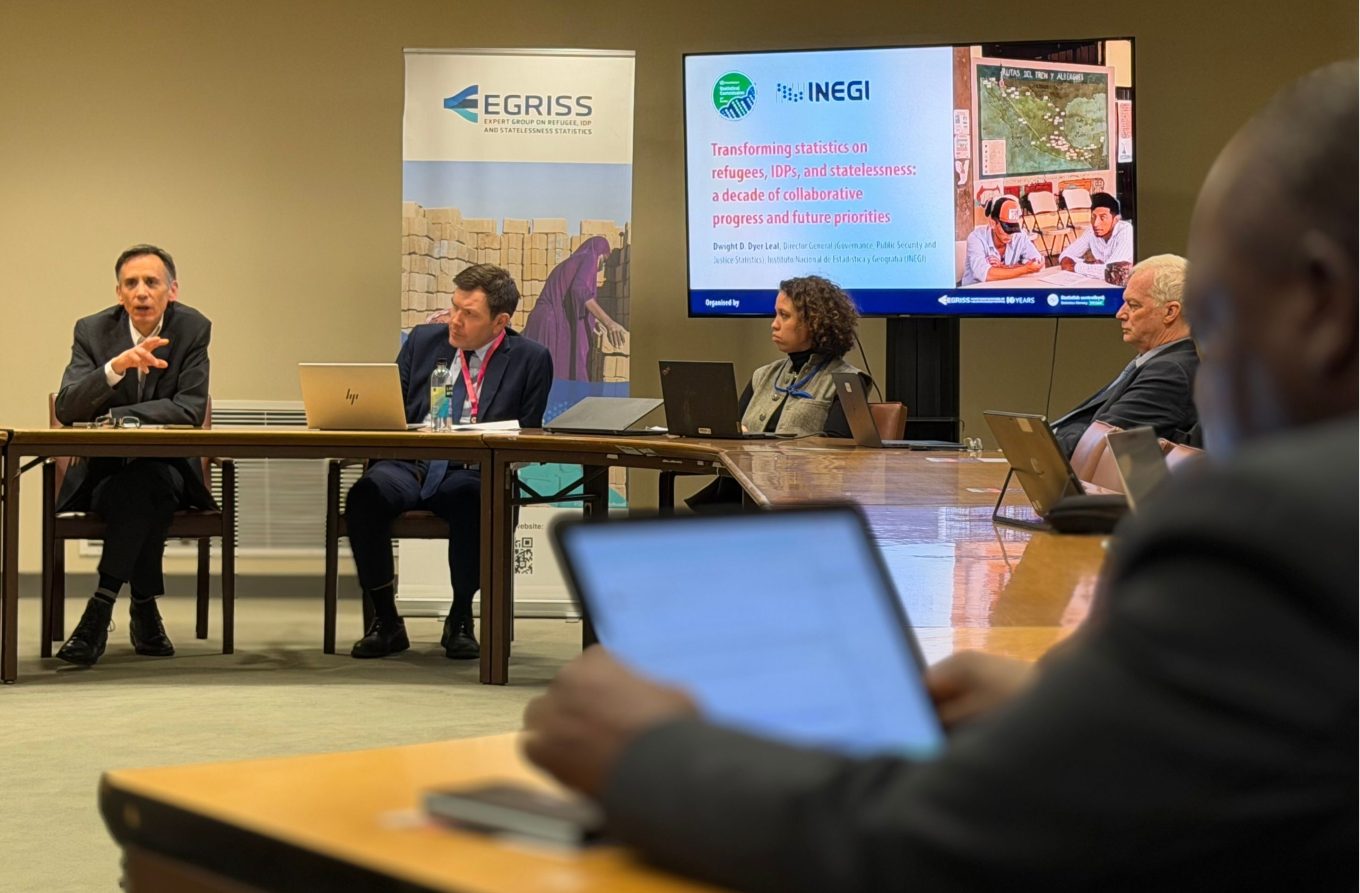
Dwight D. Dyer Leal, Director General of Governance, Public Security and Justice Statistics at INEGI, offered his reflections on the EGRISS All-Members Meeting held in Warsaw last year, and a candid account of his country’s journey with IDP statistics. About the event, he credited the in-person exchange with breaking the “national naval-gazing” that can afflict statisticians working in isolation and turning methodological challenges that had seemed uniquely Mexican into shared problems with shared solutions.
He then turned to Mexico’s own journey with IDP statistics. Even though the country has long hosted refugees, internal displacement only became a formal policy focus in 2019. That political attention catalysed statistical action. In 2021, Mexico conducted its first survey specifically targeting IDPs, in the state of Chihuahua, in collaboration with UNHCR and JIPS. In 2025, the large-scale Intercensal Survey incorporated a fully developed IDP stock identification module for the first time. “In a sense, this is like our moon landing. And yet, it is only part of the journey” he said, noting that by the end of 2026, when results are processed, Mexico expects nationally, state-level, and potentially municipal-level estimates of the IDP population.
Reflecting on INEGI’s membership in EGRISS, Dwight summarized that it has “not only pushed forward the quality of Mexico’s surveys but also helped clear up a series of methodological and operational obstacles.”
Latin America and the Caribbean: Regional Standards Take Root
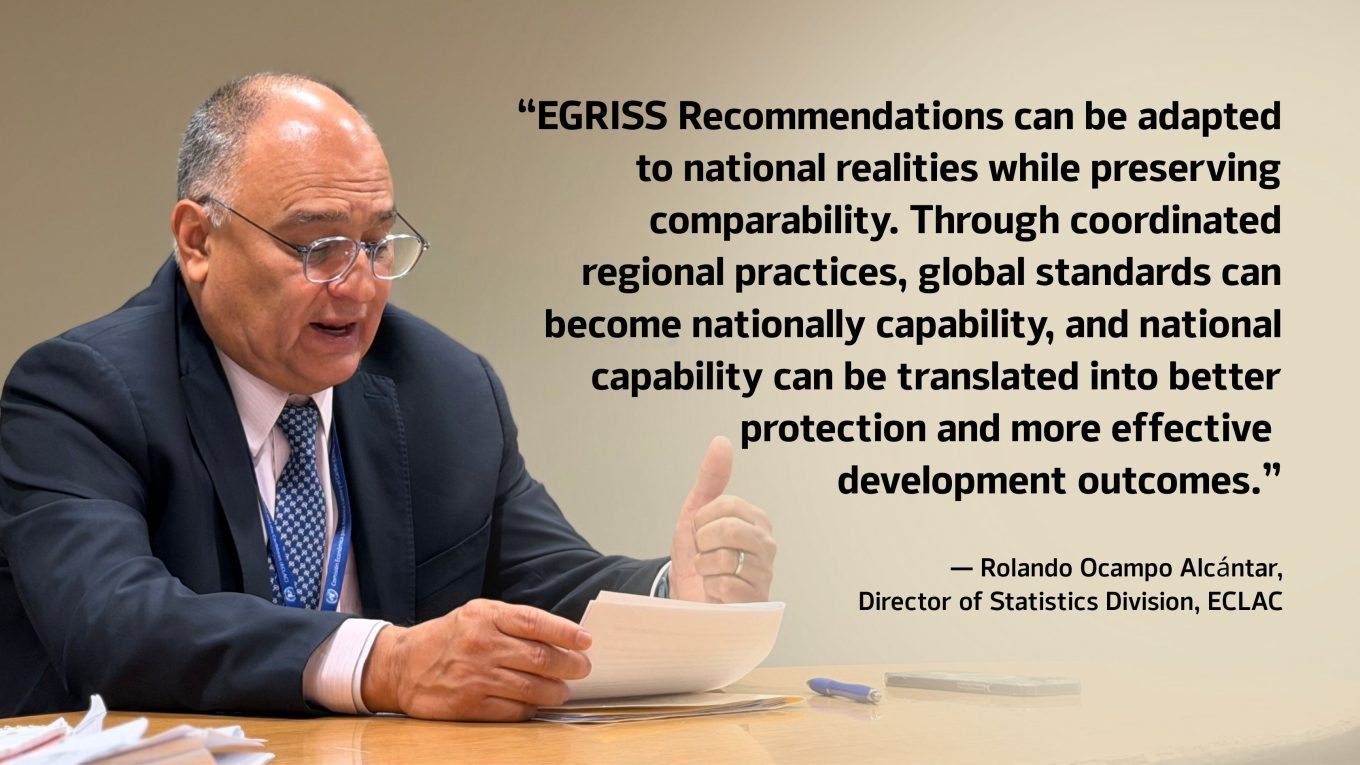
Rolando Ocampo Alcántar, Director of the Statistics Division at ECLAC, presented a concrete example of EGRISS recommendations translating into regional action: in November 2025, the Statistical Conference of the Americas endorsed a new practical guide for the production of harmonised statistics on forced displacement and migration across the region.
Developed over the 2024–2025 biennium by a working group coordinated by Honduras and supported by UNHCR, IOM, JIPS, SICA and ECLAC, the guide explicitly aligns with all three EGRISS international recommendations. It includes a regional glossary and typologies, detailed guidance for population censuses and household surveys, comprehensive guidance on administrative registers, and a dedicated chapter on inter-institutional coordination.
Three country case studies illustrate what implementation looks like in practice: Chile’s inter-institutional coordination model led by its national statistics office and migration service; Colombia’s integration of the Registro Único de Víctimas, census data, and household surveys to identify displaced populations and disaggregate by gender, ethnicity, and territory; and Honduras’s 2023 incorporation of a displacement module into its national household survey, including field testing and cognitive validation.
World Bank: A Decade of Partnership
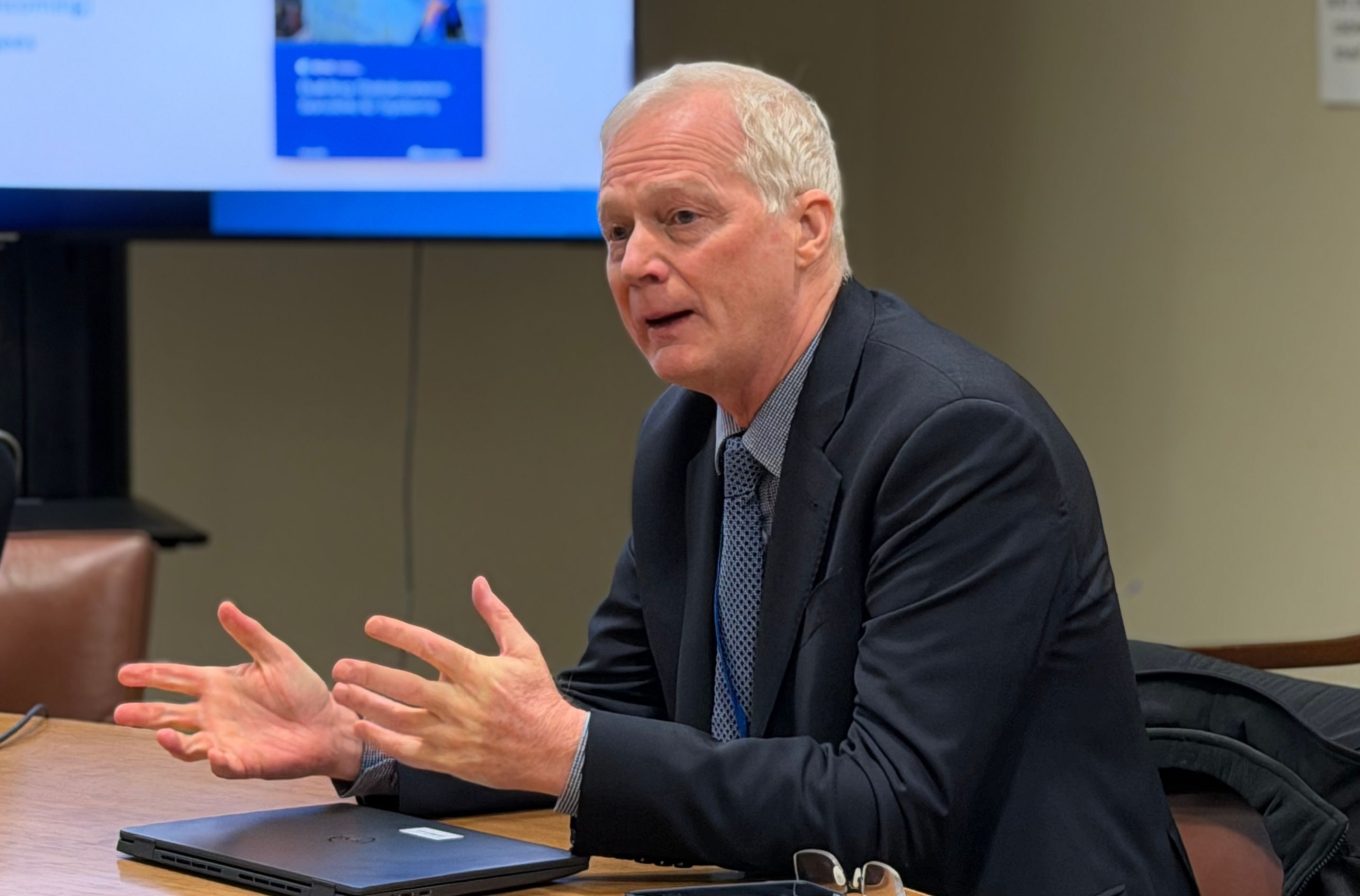
Olivier Dupriez, Deputy Chief Statistician in the Development Data Group at the World Bank, reflected on the institution’s involvement with EGRISS. “If you want the World Bank to pick-up a specific agenda, you need to be very convincing. You need standards, guidance, tools…and EGRISS has provided that when it comes to forced displacement statistics”, he argued.
He described the Expert Group as the “glue” connecting and influencing many of the various efforts across the Bank to enhance data and statistics on displacement and statelessness. This engagement has taken many forms: the Bank has contributed to EGRISS technical guidance, developed survey tools — including Survey Solutions, enhanced to handle spatial sampling for out-of-camp refugees — collaborated with UNHCR on microdata anonymisation and publication, and supported countries to incorporate refugees and IDPs into national household surveys, showing a list of 54 examples reported to the Global Annual Inclusion (GAIN) Survey that involved the Bank.
Looking Back, Moving Forward: The Secretariat’s perspective
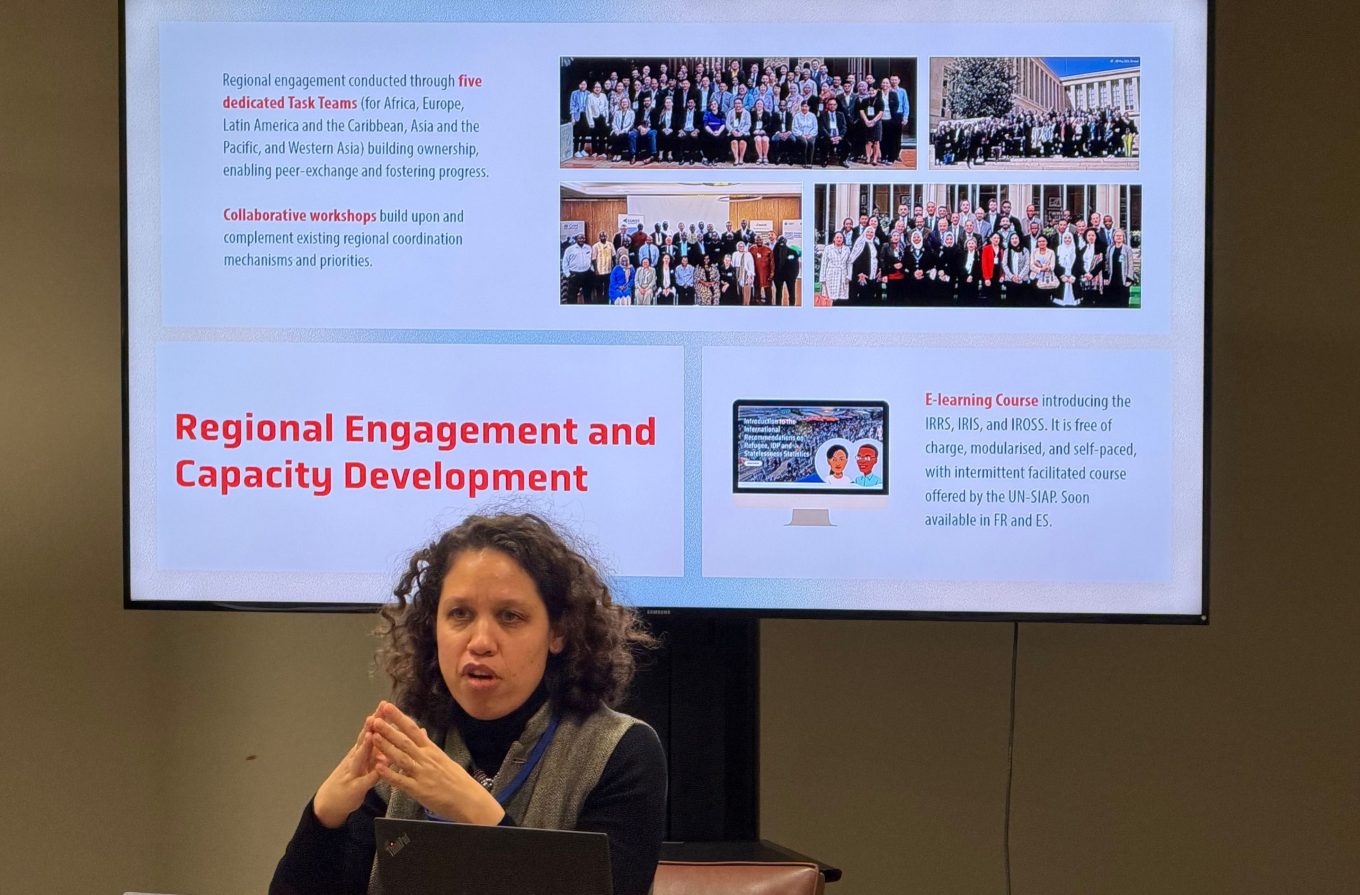
Natalia Baal, Head of the EGRISS Secretariat, concluded the panel with a synthesis of the decade. Beyond the three sets of International Recommendations, she highlighted the Compiler’s Manual (currently being updated to include statelessness), the technical subgroup working on methodological questions, regional engagement achievements, the e-learning training course, and the GAIN Survey now in its fifth consecutive year.
Looking ahead, she outlined three priorities for the next mandate. First, continuity: the architecture of standards, guidance, capacity building, and monitoring has proven its value. The demand is to do more, not reinvent. Second, updating the Recommendations: a decade of implementation experience has made a revision of the refugee and IDP recommendations timely, while the statelessness recommendations are too recent to revisit yet. Third, a sharper focus on policy impact: not just producing better statistics, but tracing how they are used and what difference they make to policy, programmes, and ultimately the people they describe.