Sustainable Development Goals

EGRISS has contributed to the identification of 12 priority SDG indicators that should be disaggregated by forced displacement status.

©UNHCR/Esther Ruth Mbabazi

Why It Matters

Why It Matters

Disaggregation by displacement status provide a more accurate understanding of the living conditions of such populations.
12 Priority Indicators

12 Priority Indicators

Structured across three policy areas, they define the minimum data countries should produce on refugees, IDPs, and statelessness.
Consultative Process

Consultative Process

The indicators were identified through a structured work among IAEG-SDGs and EGRISS members, drawing on the IRRS and IRIS.

At the heart of the 2030 Agenda is the commitment to leave no one behind. Keeping that promise requires data, yet for years, forcibly displaced and stateless populations have been overlooked by general aggregate figures. That is why, through its participation in the Inter-Agency and Expert Group on the Sustainable Development Goals Indicator Framework (IAEG-SDGs), EGRISS members identified and advocated for a list of 12 priority SDG indicators that should be prioritised for disaggregation by forced displacement status.

These indicators were identified in 2018, through a structured consultative process and drawing on the content of the International Recommendations on Refugee Statistics (IRRS) and IDP Statistics (IRIS). The proposal was submitted through the IAEG-SDGs in 2019 as part of its workstream on Data Disaggregation and welcomed by the UN Statistical Commission (Decision 50/101). The working group mapped out existing Dimensions and Categories for data disaggregation of global SDG indicators and identified a list of Policy Priority Inputs to inform future disaggregation plans.

In 2021, the group developed a Compilation of Tools and Resources for Data Disaggregation that also included contributions from EGRISS. Building on all of this, EGRISS published a dedicated Methodological Paper providing indicator-by-indicator guidance for national statistical offices.

EXPLORE

12 priority SDG indicators for forced displacement

Organised by policy area — click any goal to see the specific indicators.
I — Basic needs
II — Livelihoods
III — Civil & legal rights
See all areas
Policy area I — Basic needs and living conditions
SDG 2 Zero Hunger

Zero hunger

End hunger, achieve food security and improved nutrition and promote sustainable agriculture

+
2.2.1Prevalence of stunting among children under 5 years of age
SDG 3 Good Health

Good health and well-being

Ensure healthy lives and promote well-being for all at all ages

+
3.1.2Proportion of births attended by skilled health personnel
SDG 6 Clean Water

Clean water and sanitation

Ensure availability and sustainable management of water and sanitation for all

+
6.1.1Proportion of population using safely managed drinking water services
SDG 11 Sustainable Cities

Sustainable cities and communities

Make cities inclusive, safe, resilient, and sustainable

+
11.1.1Proportion of urban population living in slums, informal settlements or inadequate housing
Policy area II — Livelihoods and economic self-reliance
SDG 1 No Poverty

No poverty

End poverty in all its forms everywhere

+
1.2.1Proportion of population living below the national poverty line, by sex and age
SDG 4 Quality Education

Quality education

Ensure inclusive and equitable quality education and promote lifelong learning for all

+
4.1.1Proportion of children and young people achieving at least a minimum proficiency level in reading and mathematics, by sex
SDG 7 Affordable Energy

Affordable and clean energy

Ensure access to affordable, reliable, sustainable and modern energy for all

+
7.1.1Proportion of population with access to electricity
SDG 8 Decent Work

Decent work and economic growth

Promote sustained, inclusive economic growth, full employment and decent work for all

+
8.3.1Proportion of informal employment in total employment, by sex
8.5.2Unemployment rate, by sex, age, and persons with disabilities
Policy area III — Civil, political and legal rights
SDG 1 No Poverty

No poverty

End poverty in all its forms everywhere

+
1.4.2Proportion of total adult population with secure tenure rights to land, with legally recognized documentation, by sex and type of tenure
SDG 16 Peace Justice

Peace, justice and strong institutions

Promote peaceful and inclusive societies, access to justice and accountable institutions

+
16.1.4Proportion of population that feel safe walking alone around the area they live
16.9.1Proportion of children under 5 years of age whose births have been registered with a civil authority, by age
Policy area I — Basic needs and living conditions
SDG 2 Zero Hunger

Zero hunger

End hunger, achieve food security and improved nutrition and promote sustainable agriculture

+
2.2.1Prevalence of stunting among children under 5 years of age
SDG 3 Good Health

Good health and well-being

Ensure healthy lives and promote well-being for all at all ages

+
3.1.2Proportion of births attended by skilled health personnel
SDG 6 Clean Water

Clean water and sanitation

Ensure availability and sustainable management of water and sanitation for all

+
6.1.1Proportion of population using safely managed drinking water services
SDG 11 Sustainable Cities

Sustainable cities and communities

Make cities inclusive, safe, resilient, and sustainable

+
11.1.1Proportion of urban population living in slums, informal settlements or inadequate housing
Policy area II — Livelihoods and economic self-reliance
SDG 1 No Poverty

No poverty

End poverty in all its forms everywhere

+
1.2.1Proportion of population living below the national poverty line, by sex and age
SDG 4 Quality Education

Quality education

Ensure inclusive and equitable quality education and promote lifelong learning for all

+
4.1.1Proportion of children and young people achieving at least a minimum proficiency level in reading and mathematics, by sex
SDG 7 Affordable Energy

Affordable and clean energy

Ensure access to affordable, reliable, sustainable and modern energy for all

+
7.1.1Proportion of population with access to electricity
SDG 8 Decent Work

Decent work and economic growth

Promote sustained, inclusive economic growth, full employment and decent work for all

+
8.3.1Proportion of informal employment in total employment, by sex
8.5.2Unemployment rate, by sex, age, and persons with disabilities
Policy area III — Civil, political and legal rights
SDG 1 No Poverty

No poverty

End poverty in all its forms everywhere

+
1.4.2Proportion of total adult population with secure tenure rights to land, with legally recognized documentation, by sex and type of tenure
SDG 16 Peace Justice

Peace, justice and strong institutions

Promote peaceful and inclusive societies, access to justice and accountable institutions

+
16.1.4Proportion of population that feel safe walking alone around the area they live
16.9.1Proportion of children under 5 years of age whose births have been registered with a civil authority, by age

LEARN MORE

Additional Resources
Methodological Paper 3
EGRISS Methodological Paper 3: Capturing priority SDG indicators in refugee, internal displacement and statelessness contexts
Prepared by the Technical Subgroup 2, this paper identifies considerations that may be required to produce better data on refugee, IDP and stateless populations for 14 SDG indicators.
Read →
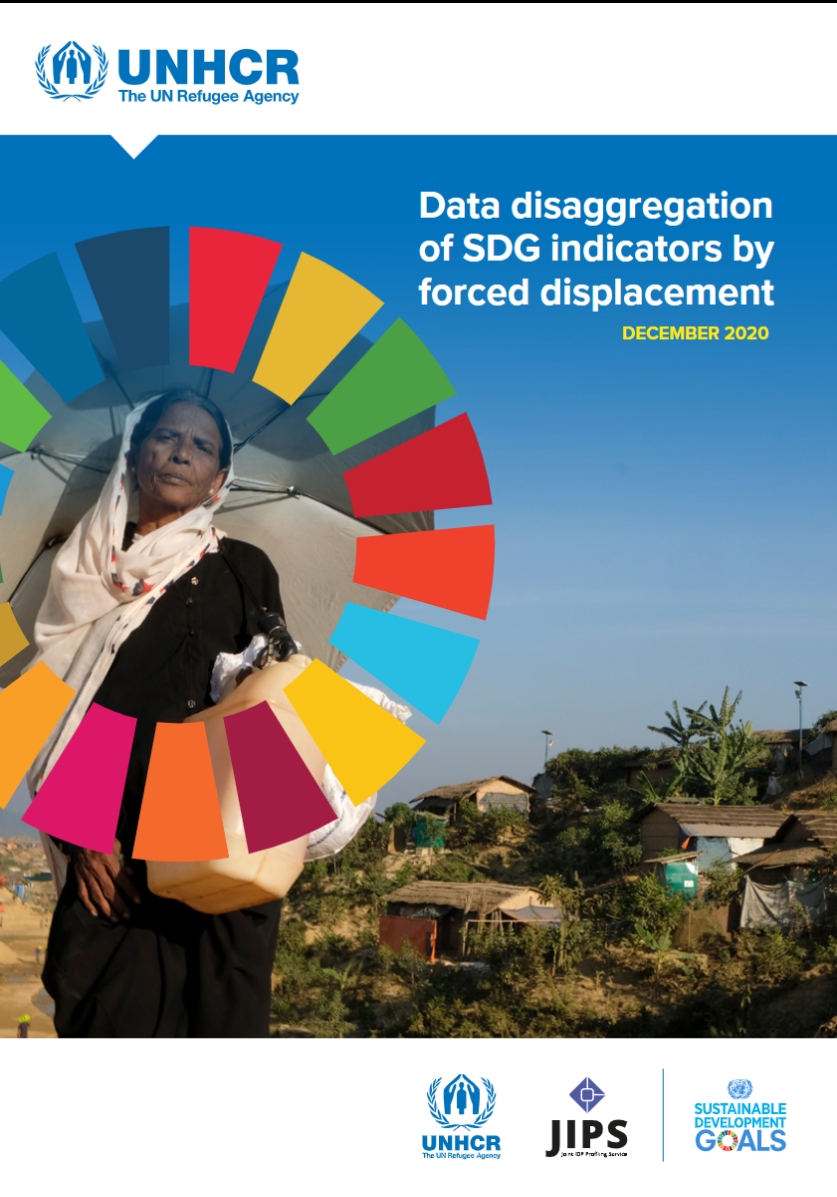
Data Disaggregation of SDG indicators
Data Disaggregation of SDG indicators by forced displacement
Report by the Joint IDP Profiling Service (JIPS) and the United Nations High Commissioner for Refugees (UNHCR).
Read →
Compilation of tools and resources
Compilation of tools and resources for data disaggregation
Prepared by the Inter-Agency and Expert Group on SDG Indicators (IAEG-SDGs) and the United Nations Statistics Division (UNSD).
↓ Download