24 August 2022
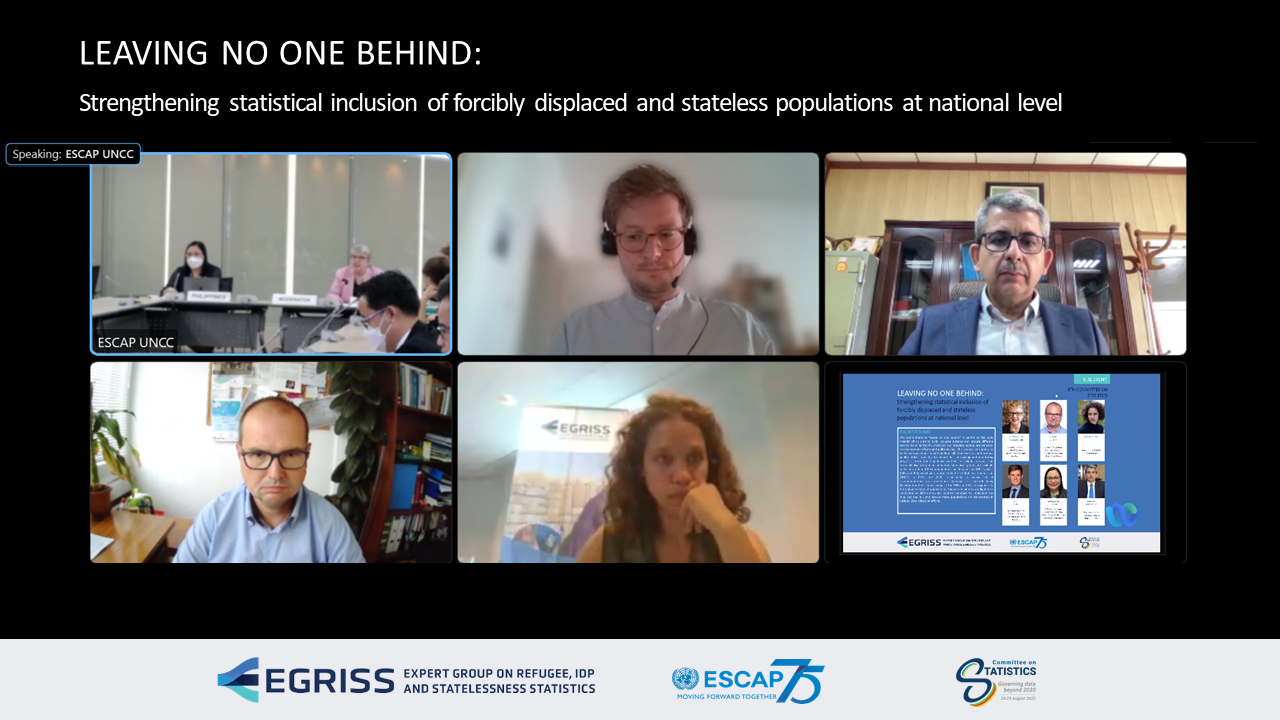
In the side-lines of the 8th Committee on Statistics of the Economic and Social Commission for Asia and the Pacific (ESCAP), EGRISS convened the event ‘Leaving no one behind: Strengthening statistical inclusion of forcibly displaced and stateless populations at national level’. The event highlighted experiences from countries working to implement the International Recommendations on Refugee Statistics (IRRS) and the International Recommendations on IDP Statistics (IRIS), as well as efforts to improve statelessness statistics. Including presentations the National Statistical Offices (NSOs) of Germany, the Kurdistan Region of Iraq, and the Philippines, panellists shared advice with their peers working in the Asia-Pacific region. In particular, key recommendations concerning national coordination, government leadership and recognition of the important role that NSOs themselves can play were articulated in the session.
The session also heard from the EGRISS Secretariat and Hungary Central Statistical Office (co-lead of EGRISS’ subgroup 1) on the scope of the international recommendations and ongoing EGRISS priorities. Moderated by the Deputy Director of UNHCR’s Regional Bureau for Asia and the Pacific, the event presented an important opportunity to raise awareness of EGRISS and existing resources with countries in the region and other stakeholders, and provided a platform for knowledge/experience sharing between practitioners.
Resources from the session: