25-27 November 2025
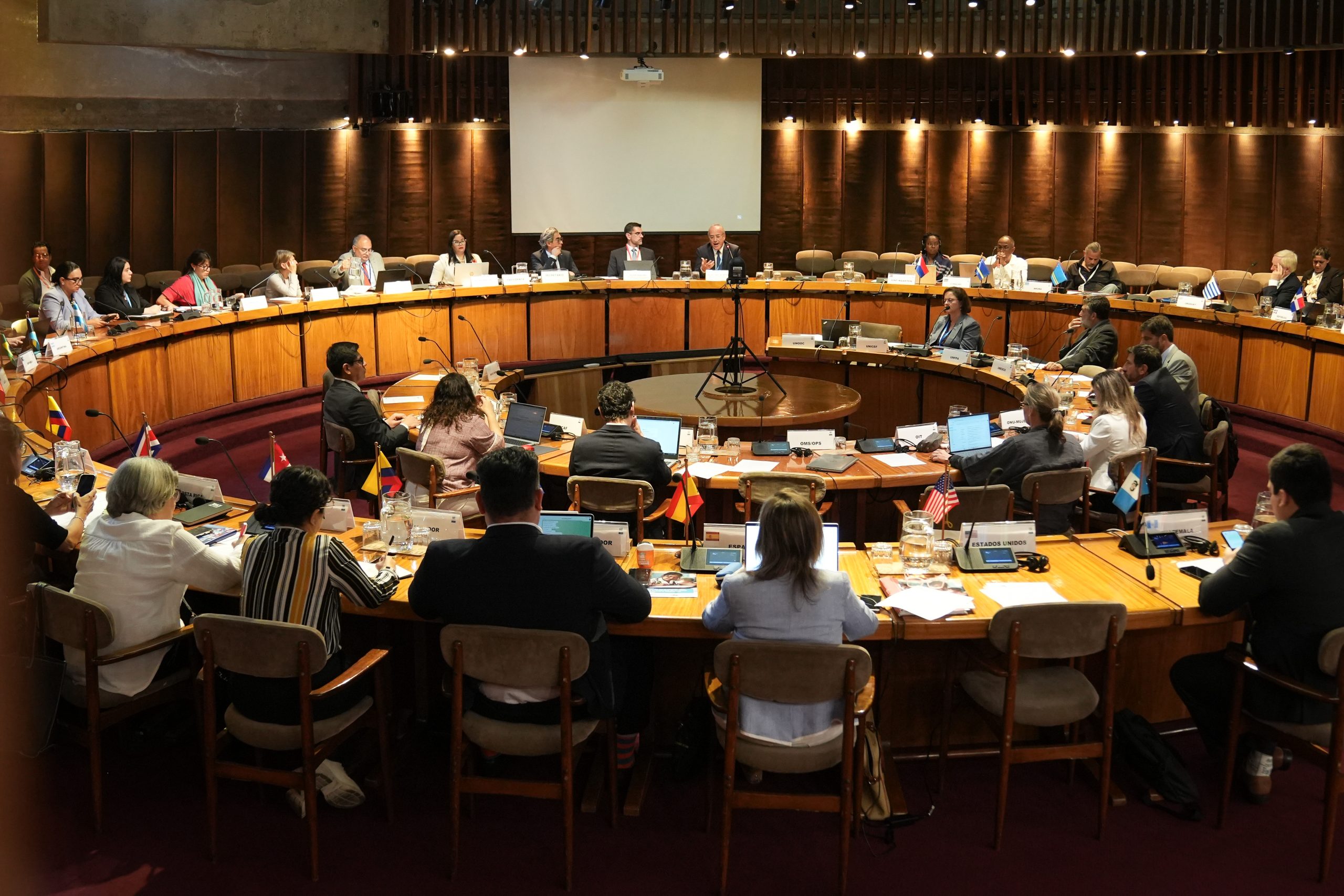
The Statistical Conference of the Americas (SCA-ECLAC) has officially endorsed the Practical Guide for the Production of Harmonised Statistics on Forced Displacement and Migration in Latin America and the Caribbean at its 13th meeting in Santiago, Chile. The document builds on the International Recommendations on Refugee, Internally Displaced Persons, Statelessness Statistics (IRRS, IRIS and IROSS), while proposing broader coherence with the revised Recommendations on International Migration and Temporary Mobility. It establishes a regional standard designed to help generate disaggregated, comparable data that gives visibility to displaced and migrant populations while strengthening responses grounded in human rights and social inclusion.
This achievement represents an exemplary model of multi-stakeholder collaboration and the progress made through EGRISS’ regional engagement efforts. It was developed by the Working Group formalised in 2023 during the 12th meeting of the SCA-ECLAC, created under the Programa Bienal de Actividades de Cooperación Regional e Internacional 2024-2025. Led by the National Institute for Statistics of Honduras, the working group also features 12 National Statistical Offices from across the region (Brazil, Belize, Chile, Colombia, Costa Rica, Cuba, Guatemala, Mexico, Panama, Paraguay, Peru, and the Dominican Republic) and regional and international partners, including the ECLAC and the Central America Statistical Commission (CENTROESTAD), JIPS, UNHCR, and IOM.
At the origin of the Guide lies the strategic partnership consolidated in 2023 between the EGRISS regional Task Team for Latin America and the Caribbean and ECLAC to strengthen statistical production on internally displaced persons, refugees, and stateless persons. The Guide includes a set of eight recommendations aimed at strengthening national statistical systems, ensuring regional comparability, raising the visibility of frequently excluded populations, and improving the quality and use of data for decision-making.
Learn more about the Guide on JIPS website.
Access the Guide here (in Spanish).