12-15th Nov 2024
The 5th United Nations World Data Forum (UNWDF) welcomed over 3,000 people to Medellin, Colombia where it was hosted by the Colombian Administrative Department of National Statistics (DANE – Spanish Acronym). Bringing together a large cross-section of the global development data community, the event was an important opportunity to showcase EGRISS’ achievements, promote the use of the IRRS, IRIS, and IROSS and connect with several members and partners in person.
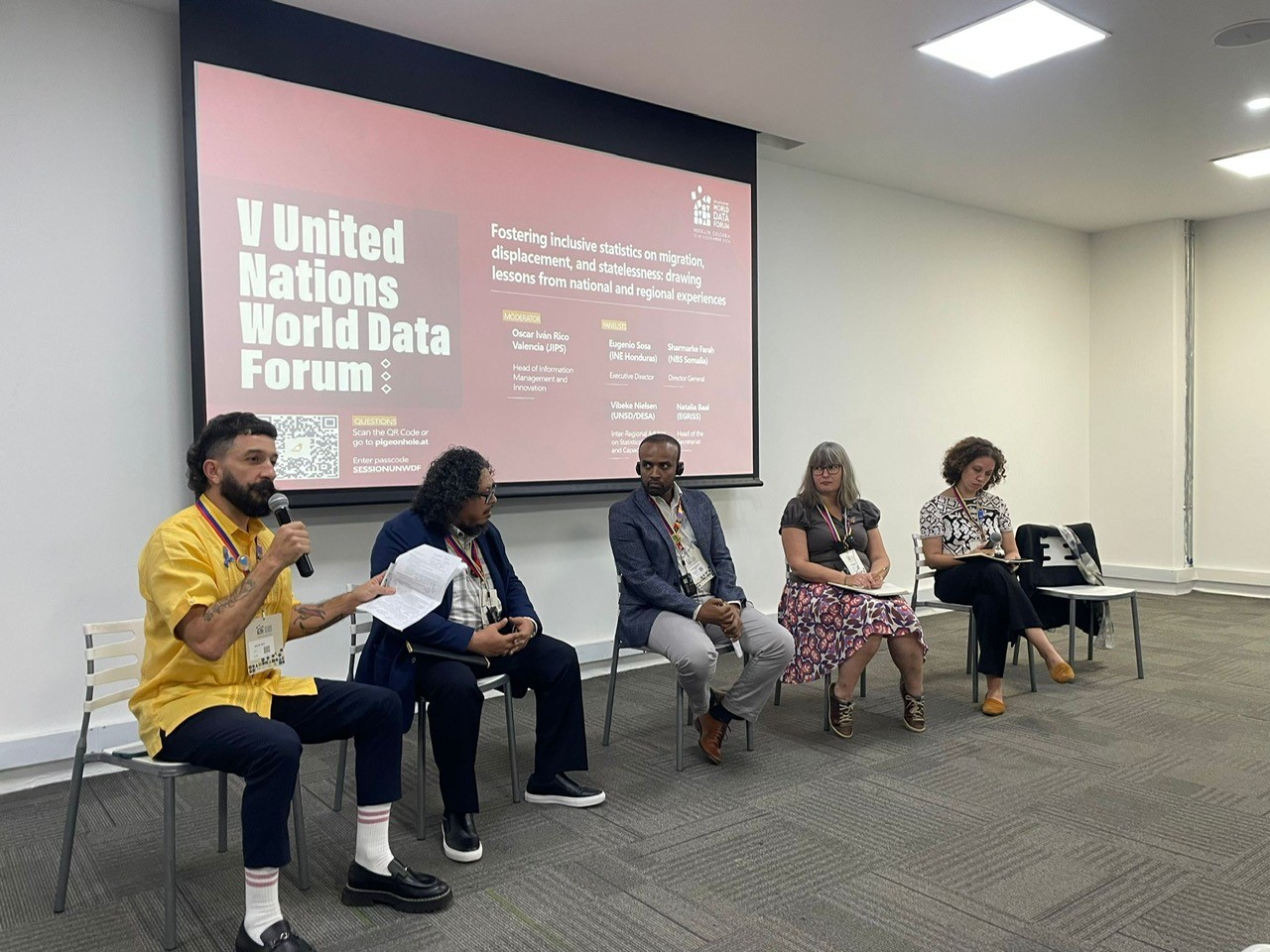
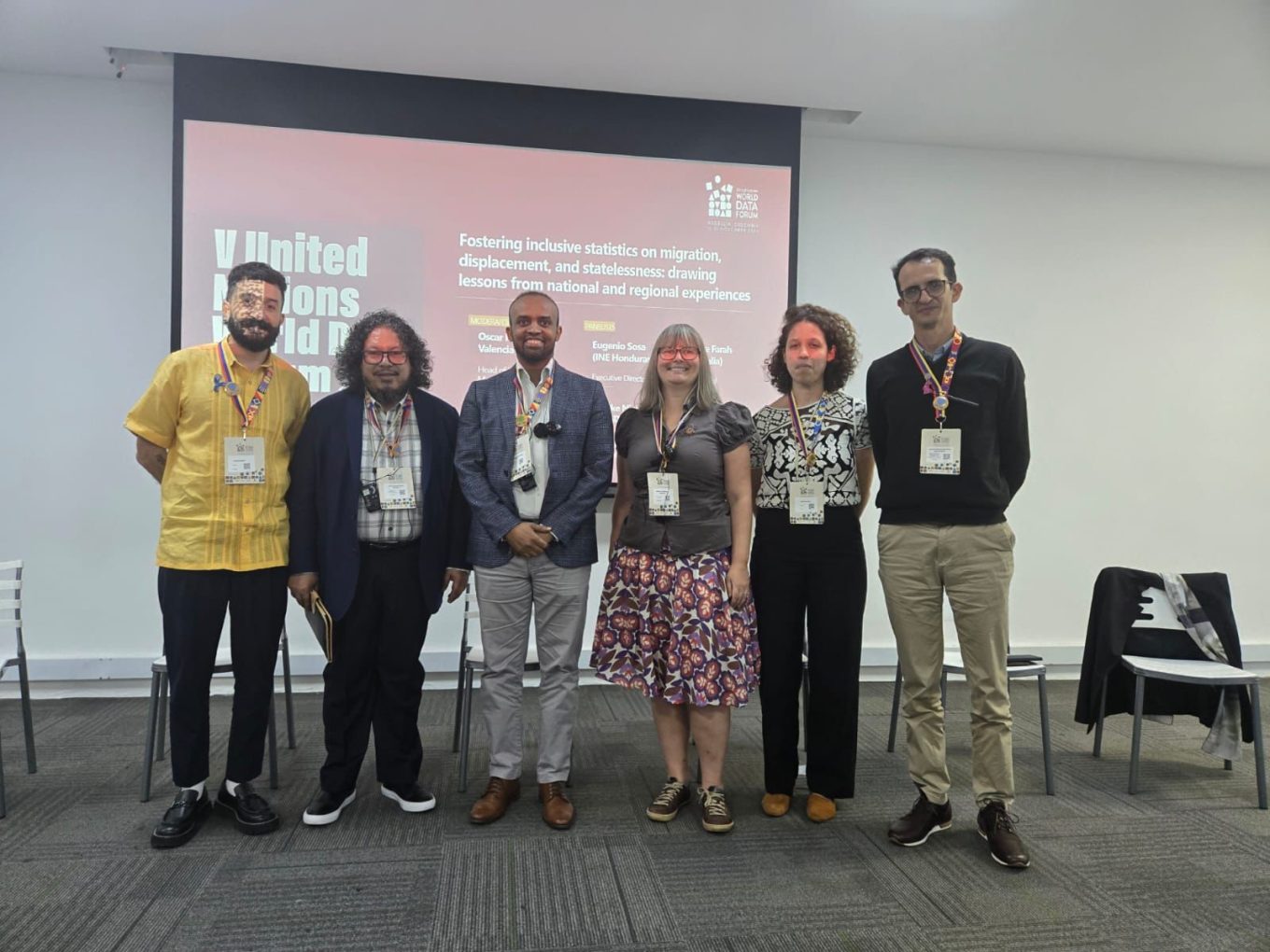
EGRISS organized a parallel session in collaboration with the Collaborative on Administrative Data (CAD) and members of the Statistical Conference of the Americas for the Economic Commission for Latin America and the Caribbean (CEA-CEPAL) working group on migration and displacement statistics. It opened with a lightening talk from DANE’s Head of Census and Demography Directo, followed by an expert panel discussion including the Director Generals from both Honduras’ INE and Somalia’s NBS alongside the global leads of both the CAD and EGRISS, moderated by JIPS’ Head of Information Management and Innovation. Building on the expertise and vantage point of these participants, the session highlighted the following key messages:
- statistical inclusion of refugees and IDPs and what lessons can be learnt from the practical application of the international recommendations
- the added value of having internationally endorsed recommendations to deal with sensitive statistical subject matter such as statelessness
- the role of regional cooperation to facilitate peer-to-peer learning and enable progress in this agenda, and
- the need to better capitalize on opportunities presented by administrative data systems to further inclusive statistics on displacement and statelessness.
More broadly, with several of the Forum’s key themes directly related to EGRISS’ scope of work (e.g. ethical practice to build trust in statistics, systems to enable more inclusive statistics, and effective partnerships to enhance capacity and create opportunities for impactful citizen data), the event was also an important learning and networking opportunity for EGRISS. With new contacts made and partnerships reinforced, we’re already looking forward to the next WDF in 2026.
Attachments: