
The Philippines
Expanding civil registration and administrative records to include people at risk of statelessness
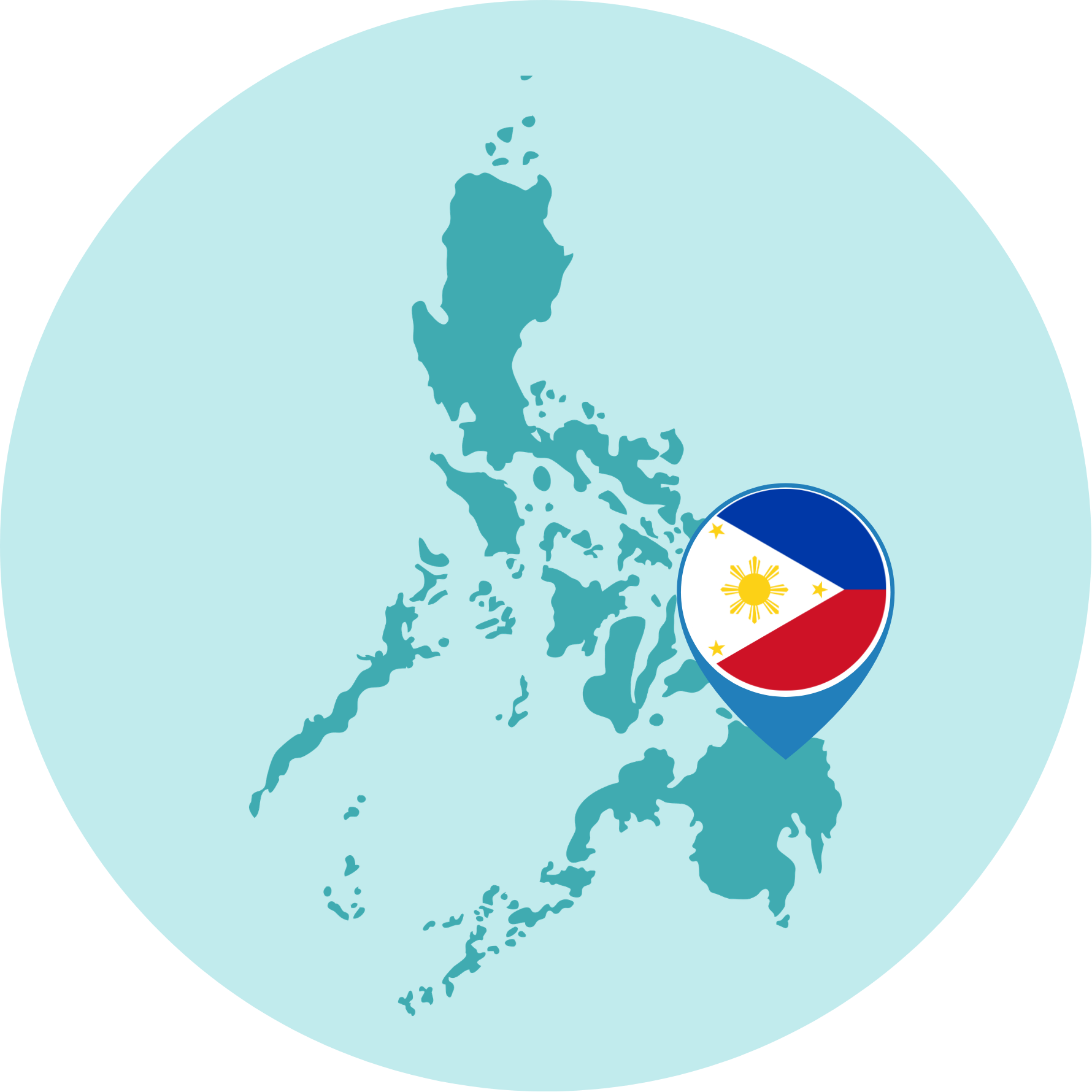
The absence of civil registration documentation heightens the risk of statelessness and undermines human rights protections and legal identity recognition. In the Philippines, challenges regarding civil registration coverage stem from its history of occupation and conflict. In addition, the country’s archipelagic geography, with over 7,100 islands, creates substantial barriers to administrative access. These constraints are acute in Mindanao’s conflict-affected regions, among indigenous communities, maritime populations, and children of undocumented parents.
To address these challenges in the region, the Civil Registration and Vital Statistics (CRVS) Decade for Asia and the Pacific (2015-2024) established robust frameworks and goals. Aligning with this initiative, the Philippines committed to 99.5% birth registration coverage and launched the National Action Plan (NAP) to End Statelessness in November 2017. In the country, the Philippine Statistics Authority (PSA) coordinates CRVS activities within a robust legal and statistical framework: Section 6 of Republic Act No. 10625, the “Philippine Statistical Act of 2013,” mandates the institution to “carry out, enforce, and administer civil registration functions” as per Act No. 3753.
Practically, registrations are performed at over 1,634 Local Government Units (LGUs) by Local Civil Registry Offices (LCROs), which verify forms for accuracy, record them in a Registry Book, and assign a Registry Number. Data is then uploaded to the Philippine Civil Registry Information System (PhilCRIS), developed by PSA, or to LGU information systems for local records management. All vital events are digitised and uploaded to the national PSA Civil Registry System.
Advancing the national goals of the CRVS Decade
Recognising that statistics on Persons at Risk of Statelessness (PAROS) are essential for prevention and timely intervention, the Philippines, through PSA, has implemented initiatives and cross-sector partnerships to achieve birth registration goals. An Inter-Agency Committee on CRVS (IAC-CRVS) was created in 2015, comprising representatives from PSA, relevant departments (Health, Foreign Affairs, Justice, Education, Social Welfare, Interior and Local Government), the Cabinet Secretary’s Office, and the Commission on Population. This was replicated regionally to oversee CRVS programme implementation and policy review. The PSA has implemented diverse initiatives and strategic partnerships across governmental and non-governmental sectors to achieve birth registration goals.
Birth Registration Assistance Project (BRAP)
Launched in February 2022 in partnership with Local Civil Registry Offices, targets two million unregistered individuals among Indigenous Peoples, Muslim Filipinos, the poorest sector, and those in remote areas. Beyond registration, the initiative links individuals to the Philippine Identification System, granting them a National ID and associated services. As of December 2025, 473,281 births had been registered out of the 1,397,357 records verified as negative or those for which no birth certificates were registered with the LCRO. PSA has issued 283,601 free Certificates of Live Birth on Security Paper to beneficiaries.
Improving Access to Birth Registration for Indigenous Groups in Eastern Mindoro (I-BRIDGE, 2021)
In partnership with the Initiatives for Dialogue and Empowerment through Alternative Legal Services (IDEALS) and the Committee of German Doctors for Developing Countries (CGDDC), mobile civil registration units reached Mangyan communities across 15 LGUs across Oriental Mindoro (Puerto Galera, San Teodoro, Baco, Calapan, Naujan, Victoria, Socorro, Polo, Pinamalayan, Gloria, Bansud, Bongabong, Roxas, Mansalay, and Bulalacao)and three municipalities in Occidental Mindoro (Magsaysay, Calintaan, and Sablayan). Negative Certifications were issued where no record existed, and Memorandum Circular No. 2025-02 (January 2025) relaxed late registration requirements to reduce barriers. In total, 6,919 birth records were issued, (positive and negative) were issued, providing Mangyan community members with legal recognition and improved access to government services.
Birth records issued by the I-BRIDGE project in different localities
Philippine Nikkei Jin Kai (2024)
Formalised through a Memorandum of Agreement in 2024, this partnership addresses documentation challenges faced by Japanese-descended Filipino families — a legacy of the Japanese occupation (1942–1945) and post-war stigma that led many to forgo registration. Through targeted verification and registration of vital records, PSA has, as of December 2025, completed 20 positive verifications and issued 47 negative certifications.
Inclusion of Refugees and Stateless Persons in National ID Registration
PSA has registered 101 refugees to the National Identification System during its continuous pilot registration for refugees and stateless individuals in 2025. Those registered in the National ID system were issued an ePhilID with status as resident aliens in the Philippines.
MNLF Transformation Program (2023)
Under a Memorandum of Agreement signed in June 2023 with the Office of the Presidential Adviser on the Peace, Reconciliation, and Unity (OPAPRU), PSA helps 2,000 former Moro National Liberation Front (MNLF) combatants and their families establish legal identities by validating members against civil registry records and assisting with vital event registration. Focused on the Basilan, Maguindanao Del Norte, Maguindanao Del Sur, Lanao Del Sur, and North Cotabato, as of 26 December 2025, PSA has verified 2,930 records, of which 350 (12%) were found negative or non-existent in the Civil Registry System. PSA has issued 1,246 Certificates of Live Birth on security paper under this initiative.
Use of the International Recommendations
The IRRS, IRIS, and IROSS emphasise that civil registers should include all individuals regardless of nationality or ethnicity, since vital events — births, deaths, marriages, divorces — affect nationals, foreigners, and refugees alike. Civil registration data offers a valuable resource for statistics on stateless populations, as lack of registration heightens statelessness risk. IROSS specifically recommends birth registration as a key variable for analysing characteristics of stateless persons, noting that universal registration helps estimate affected population size. It further suggests integrating regional efforts with broader initiatives, citing the CRVS Decade as a good example. PSA’s initiatives align with these IROSS considerations, working to remove social and administrative barriers to registration.
Integrating PAROS-related indicators into national data systems marks a significant step towards safeguarding the right to identity and nationality. In 2024, PSA conducted its Census of Population (POPCEN) simultaneously with the Community-Based Monitoring System (CBMS), incorporating indicators on refugees, IDPs, and stateless persons. Initial results are being validated against administrative records from the Department of Justice, particularly the registry of recognised refugees and asylum seekers, before official release. Birth registration data from the census is likewise being cross validated with the PSA Civil Registry System to ensure accuracy and consistency.
Conclusion
As one of 19 government offices in the NAP to End Statelessness, PSA’s civil registration work supports implementation through two mechanisms: birth registration programmes that prevent statelessness, and data collection enabling evidence-based policy and monitoring. Through targeted programmes, PSA operationalises multiple NAP Action Points: Action Point 5 (Ensure Birth Registration) by reaching excluded populations; Action Points 1 (Resolve Existing Cases) and 2 (Ensure No Child is Born Stateless) by issuing negative certifications for late registration and breaking intergenerational documentation gaps; and Action Point 4 (Grant Protection Status) through pilot registration of refugees in the National ID System, creating documentary foundations for naturalisation. PSA’s most critical NAP contribution lies in Action Point 7 (Improve Data on Stateless Populations).
The Philippines’ experience demonstrates how strategic partnerships and targeted interventions can transform administrative systems into powerful tools for inclusion and recognition, offering valuable lessons for other nations facing similar challenges. Particularly noteworthy is PSA’s willingness to adapt regulatory frameworks to meet the needs of marginalised groups — whether through mobile registration units that overcome geographic barriers or policy adjustments that accommodate the complex realities of conflict-affected populations. Ultimately, this work makes civil registration become more than an administrative function and is about people: behind every registration number is a person gaining the ability to enrol in school, access healthcare, vote, or simply prove they exist.
COVER PHOTO: At Al Barka Municipal Hall, Municipal Civil Registrar Milda Salih led her team in conducting on-site birth registration, ensuring that no one is left unseen or unrecognised.
© UNHCR/Gia Luga