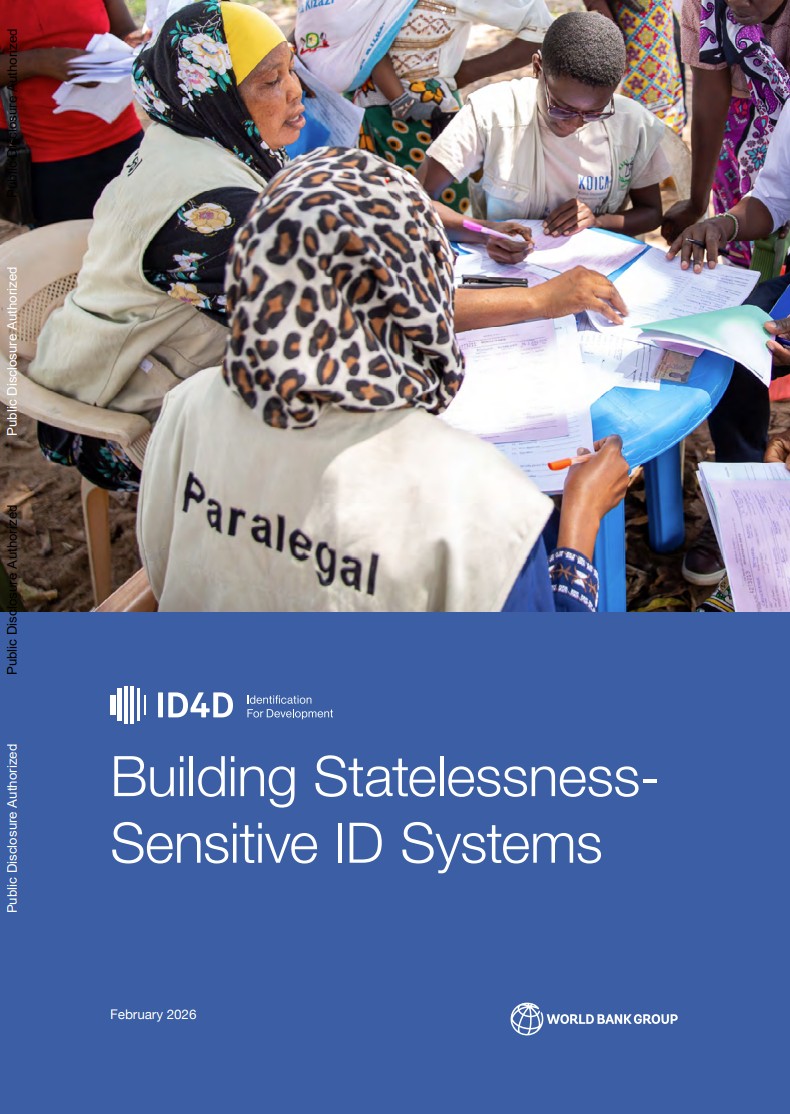
This guidance note from the World Bank’s Identification for Development (ID4D) initiative, developed in close collaboration with the UNHCR, provides practical recommendations for integrating statelessness considerations into the design and implementation of digital identification systems. As countries accelerate the rollout of Digital Public Infrastructure, millions of stateless people risk being excluded or further marginalized — or exposed to new harms — if their situation is not taken into account from the outset.
The document outlines key challenges facing stateless populations, including legal and administrative barriers to enrollment, data protection risks, and weak due process protections. It also identifies concrete opportunities for ID systems to support inclusion, such as improving birth registration, issuing nationality documentation to those entitled, and establishing pathways to citizenship.
Notably, the guidance underscores the importance of improving the statistical visibility of statelessness. It highlights the International Recommendations on Statelessness Statistics (IROSS), endorsed by the UN Statistical Commission in 2023, as a critical framework for improving the quality and comparability of official statelessness data — and encourages governments to apply IROSS standards through their National Statistical Offices to strengthen planning, accountability, and evidence-based policy. The guidance is aimed at policymakers, development practitioners, civil society, and international organizations working toward the SDG 16.9 goal of legal identity for all.