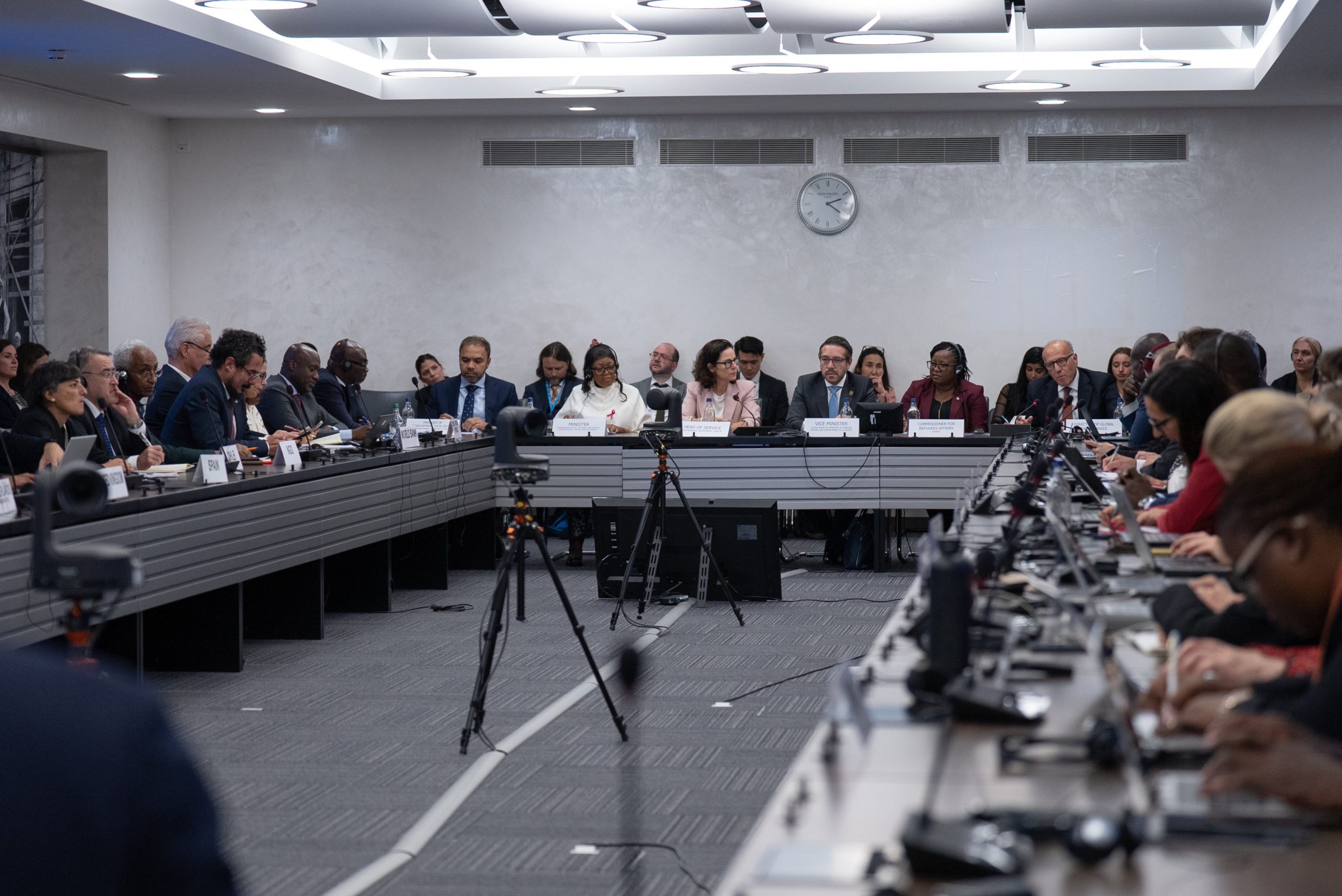
The 50 by 35 vision of the UN Refugee Agency (UNHCR) sets a clear target: at least half of all refugees in long-term displacement should have moved beyond aid dependency, through greater self-reliance and pathways to solutions, by 2035. To examine how data and evidence can help deliver this goal, EGRISS worked with UNHCR and the World Bank–UNHCR Joint Data Center on Forced Displacement (JDC), to convene a side event at the 77th session of UNHCR’s Executive Committee (ExCom). Host countries – Ecuador, Kenya and Central African Republic – donors and partners looked at how including refugees in national statistical systems is already shaping policy and investment, and what it will take to sustain this momentum.
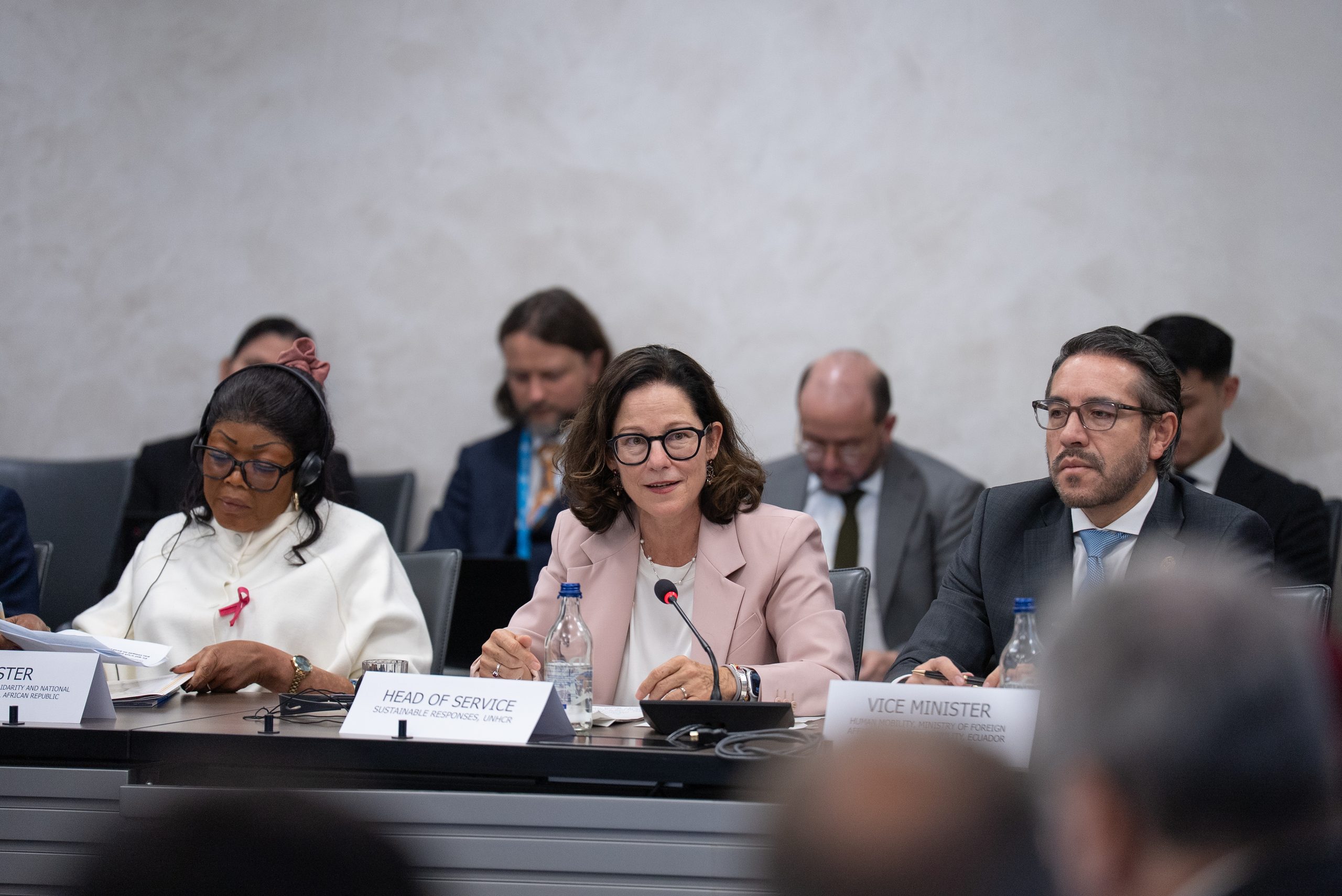
Moderating the session, Elizabeth Eyster, Head of UNHCR’s Sustainable Responses Service, pointed to the progress made on socioeconomic data. Some 60 national statistical institutions now lead their own approaches to including forcibly displaced people, supported by common international standards and strategic partnerships. The question now, she said, is how to use this data more effectively in decision-making and ensure it can be sustainably produced. Looking at the full room, she noted that ten years ago it could not have been filled and summarized the key theme running through the whole discussion: “If you don’t show up in the data, you don’t show up in the plans.”
When evidence changes policy
For Saúl Pacurucu, Vice Minister of Human Mobility at Ecuador’s Ministry of Foreign Affairs and Human Mobility, the starting point is simple: refugees and migrants who are not visible in statistics “cannot be seen in policy”. As the number of Venezuelans in Ecuador grew, counting them was no longer enough. The Government needed to understand their access to education, services, and work. The data that followed replaced assumptions with evidence. Only 44% of Venezuelan adolescents attended secondary education, compared with 76% of Ecuadorians, which showed that the main challenge was “not a lack of skills but barriers to access.” Because the national census cannot identify refugees, Ecuador has turned to administrative records, and it now wants to go further. The Vice Minister proposed working with the national statistics institute (INEC), the World Bank, and UNHCR to include refugees in the national employment survey (ENEMDU), so that poverty and self-reliance can be measured on a comparable basis.
Inclusion begins with visibility. The goal is not a separate data system, but a stronger national statistical ecosystem that informs national planning.
 Saúl PacurucuVice Minister of Human Mobility, Ministry of Foreign Affairs and Human Mobility, Ecuador
Kenya’s experience shows how far such evidence can go. CS Mercy Mwasaru, Commissioner for Refugee Affairs, explained that registration records show who refugees are, but not how they live. That gap matters because socioeconomic data can change lives. A 2019 assessment of the stateless Shona community informed the Government’s decision the following year to grant citizenship. In 2024, a follow-up found that members could open bank accounts, attend school, and work in the formal economy. Evidence has also challenged assumptions about aid. With more than 80% of refugees in camps and settlements living in multidimensional poverty, Kenya’s data shows that reducing humanitarian assistance does not, by itself, create self-reliance. Refugees are now included in the Kenya Integrated Household Budget Survey 2025/26, a sign of national ownership that the Government now aims to institutionalise.
Evidence is not an end in itself but a foundation for better policy, more effective investment and accountability.
 CS Mercy MwasaruCommissioner for Refugee Affairs, Kenya
Sustaining it, she stressed, requires investment in national statistical systems, effective coordination, predictable financing, and continued data collection.
What statistical inclusion has changed
The Central African Republic showed what this shift looks like on the ground. For H.E. Josiane Lina Bemaka-Soui, Minister of Humanitarian Action, Solidarity and National Reconciliation, displaced people “used to be a footnote” in national statistics. Now they are integral. For instance, the country’s fourth general population and housing census includes refugees, internally displaced people, and asylum seekers, and a household survey provides a baseline for measuring whether policies are improving their lives. This evidence allows the Government to anticipate rather than react, and to plan where and how returns can be sustainable. Yet the Minister was clear that data alone is not enough. Plans are in place and communities are ready, but financing remains the missing piece, and the value of the data will only show in better services, documentation and jobs.
People who have not been seen cannot be protected, people who have not been counted cannot be financed. We don’t just want those displaced counted, we want them to count in our policies.
 H.E. Josiane Lina Bemaka-SouiMinister of Humanitarian Action, Solidarity and National Reconciliation, Central African Republic
Evidence driving investment
Public goods don’t fall from the sky. Collecting this data may cost millions, but the cost is in the billions when we don’t do it.
 Umar SerajuddinManager, Development Data Group, World Bank
Umar Serajuddin, Manager at the World Bank’s Development Data Group, set out how comparable data on refugees and hosts underpins World Bank financing. He explained that data supported by the JDC has informed USD 4.7 billion in development investment. He saw in 50 by 35 an echo of the dollar-a-day poverty line, set in 1990 on far thinner data than exists on refugees today, which went on to drive decades of investment in measurement and policy. “Goals create momentum,” he said, “but for it to work, we first need to measure it.” He made the case for including refugees in national surveys rather than running parallel exercises, emphasising it costs less and gives governments numbers they own and trust. Progress is already visible: in 2019, only four data points on refugee poverty existed. Today there is data for 14 of the 20 largest host countries, and over 60 national statistical systems include forcibly displaced people, helped by EGRISS standards.
Ayman Gharaibeh, Director of UNHCR’s Global Data Service, introduced the new Refugee Data Portal. It brings quality-assured population, protection and socioeconomic data from across UNHCR and its partners into one harmonised platform, replacing six separate ones. “The challenge was never really the data,” he said, but its accessibility. The Portal will help track whether refugees are accessing education, finding work and moving out of poverty, the very indicators 50 by 35 will need.
Explore the PortalSustaining the data transformation
Member States strongly backed the agenda. South Sudan and Chad shared experiences in the pursuit of refugee self-reliance and highlighted the added value of nationally shared data to guide how refugees are included. Germany described data as a cornerstone of cost-efficient responses across the humanitarian, development and peace nexus and called for a move away from single-purpose datasets towards more harmonised models. Notably, Denmark described the event as a landmark. To have three host country representatives speaking on the value of data and national statistics would have been “almost unthinkable” a few years ago. Denmark credited the work of the World Bank, UNHCR, the JDC, EGRISS and national statistical offices, together with host governments’ political will, for enabling this impactful transformation: “What gets measured gets done.” It called for sustained funding and policy engagement as resources and political attention shift elsewhere.
Overall, the discussion showed how far the field has come: three host governments made the case for statistical inclusion as the basis for rights-based policy, in a room that could not have been filled a decade ago. Sustaining that progress will depend on predictable financing, strong national statistical systems and common standards that make data comparable across countries. Through the International Recommendations on Refugee, IDP and Statelessness Statistics (IRRS, IRIS and IROSS), its capacity-strengthening work, including the E-learning Course, Training Package, and Compiler’s Manual, and guided by its mandate from the UN Statistical Commission, EGRISS will continue to play its part to help improve official statistics on forcibly displaced and stateless people that will underpin inclusive national policies and help measure progress towards 50 by 35.